欢迎您,
游客
欢迎您,
游客

展览日期:2022年08月13日 ~ 2022年08月28日
辛丑墨事——当代水墨六人展
王鲁湘
Xin Chou Ink Matters
Exhibition of Contemporary Ink Paintings by Tian Liming, Liu Jin'an, Yuan Wu, Xing Qingren, Zhang Jiangzhou & Yao Dawu
By Wang Luxiang
把这六个当代水墨画家凑到一起,并没有什么特别的理由。六个人,画风不同,师承不同,题材不同,五个人物画家,一个花鸟画家,搁一块儿做展览,要取一个通常意义上的主题性标题,还真犯难。否定了几个标题后,保留了这个,看似平常,也还有些说道。
There are no certain unique reasons to get these six Chinese contemporary ink painters together. Since they, five specializing on figure painting and one on flower and bird panting, have different painting styles, distinctive successions of teachings and themes in this area, it is really something difficult to gather them in one exhibition and offer a title with common themes containing all the aspects of their features. The title as you are seeing now is screened after negating several other titles. You may think it is as common as ordinary words, however, there is still some significance to some extent.
首先,这是一个在农历辛丑年举办的水墨画展览。我可以自信地说,因为这六个画家的聚首,他们单个乘以六的学术份量,已足以构成本年度的一个美术事件。换句话说,这是辛丑年一个事件级的水墨画展,所以叫《辛丑墨事》。以干支纪年冠名,是以显示隆重。
Firstly, it is an exhibition of ink painting held in the lunar year of Xinchou. Confidently, such exhibition can be reputed as a great artistic event this year considering the gathering of six great painters, the academic weight of them multiplied by six aspects of influence in this field. In other words, it can be reputed as an exhibition of ink painting held in Xinchou year with great influence, in this regard, it is entitled as Xinchou Ink Matters. Moreover, with Ganzhi chronicle as the title, the grand and solemn feeling is enhanced accordingly.
其二,辛丑年不是寻常年,历史上的辛丑年都有大事发生,今年可能也不例外。但愿不会发生什么大事,如果一定有大事发生,我寄希望于我们这件“辛丑墨事”能够对冲它,而成为辛丑年唯一的大事,让我们祈祷。
Secondly, in Xinchou year, unusual events always occur out of blue, which is proved by the great events happening from time to time in history, this year is also coincided with Xinchou year, so there is no exception! Everybody wishes no bad events happening. If it is still happening unfortunately, we expect such exhibition titled Xinchou Ink Matters will tackle it and prevent it. We wish it to be the only event in Xinchou year, let’s pray together.
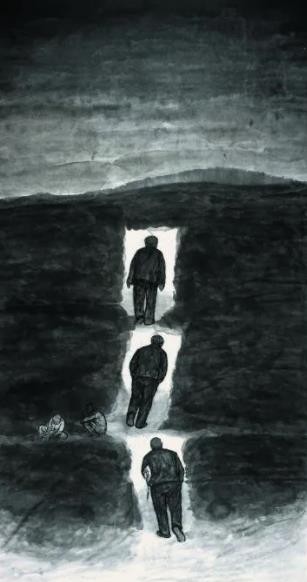
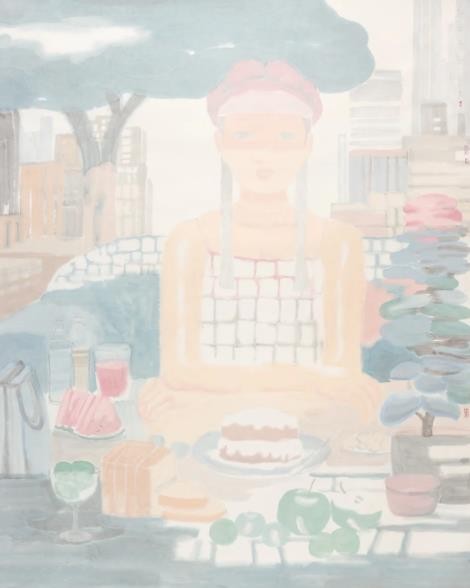
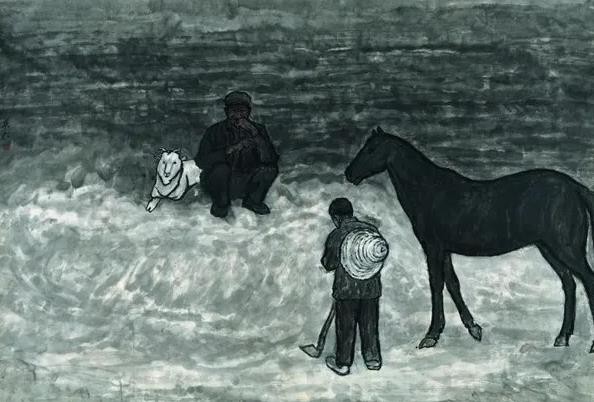
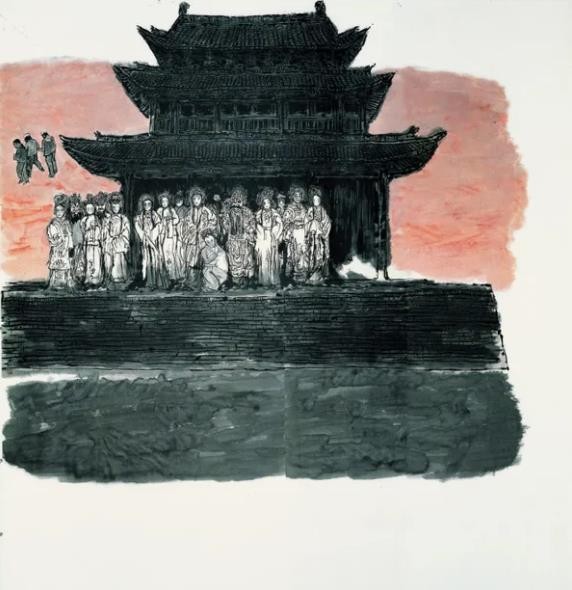
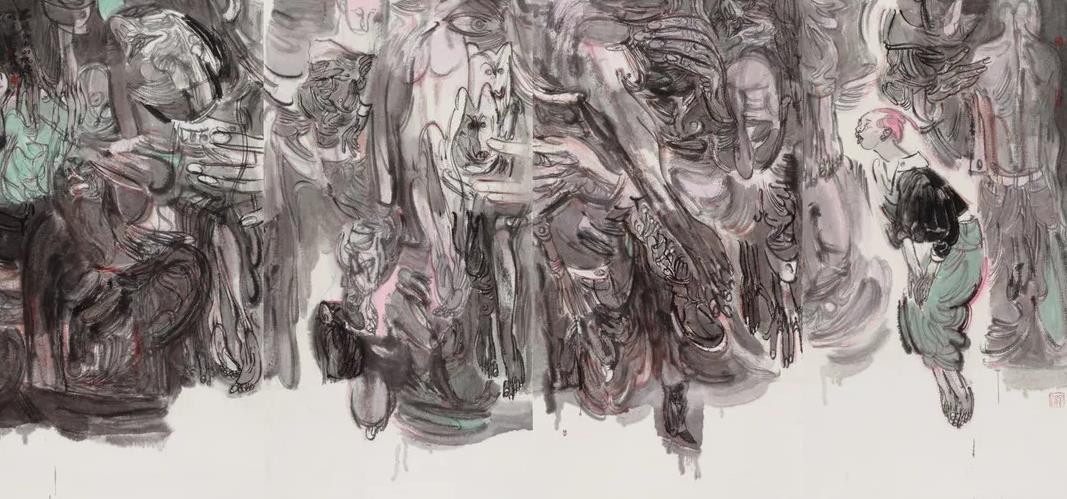
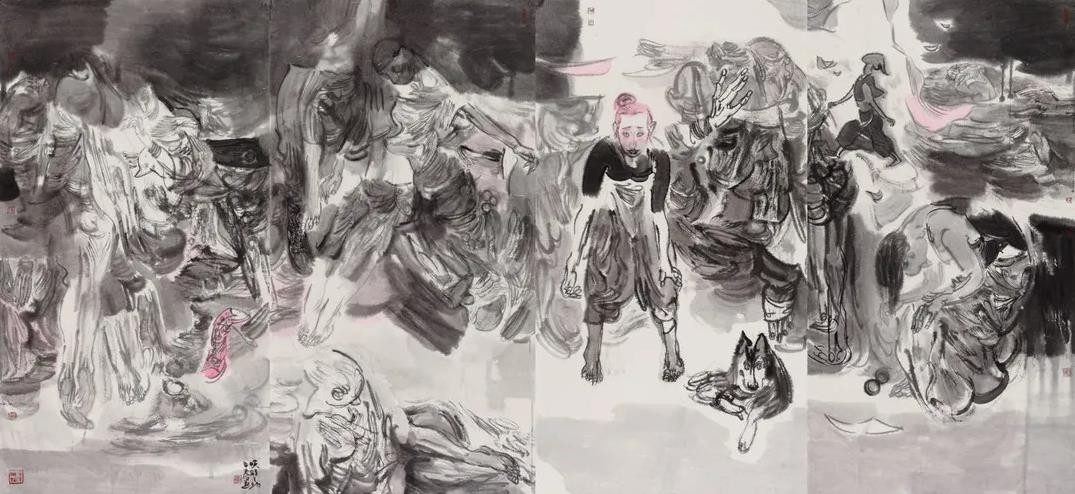
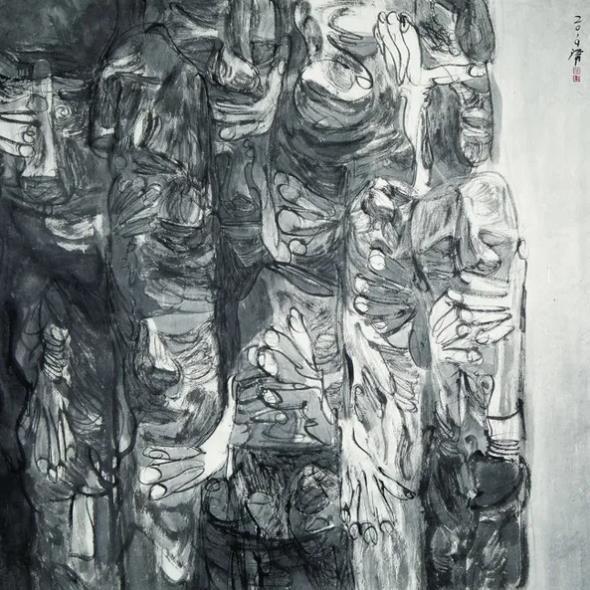
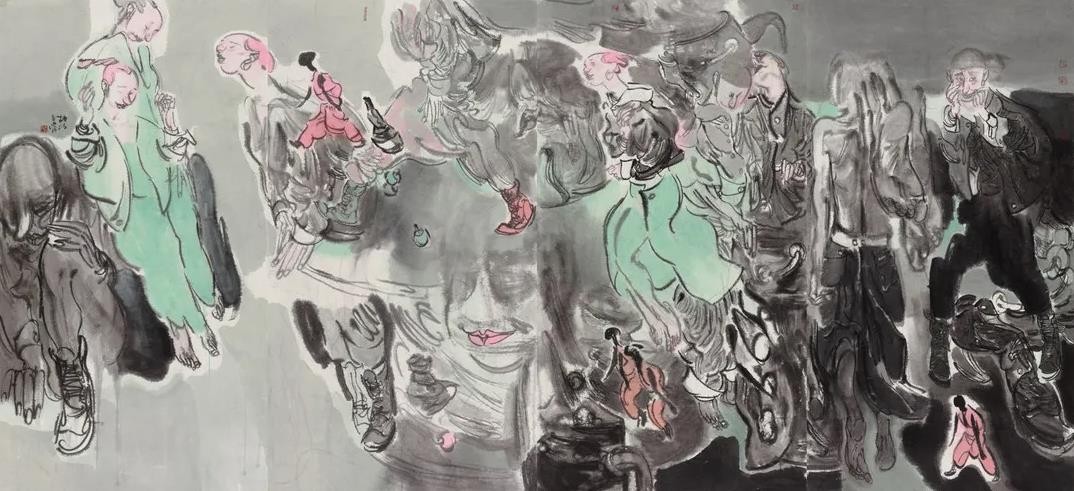
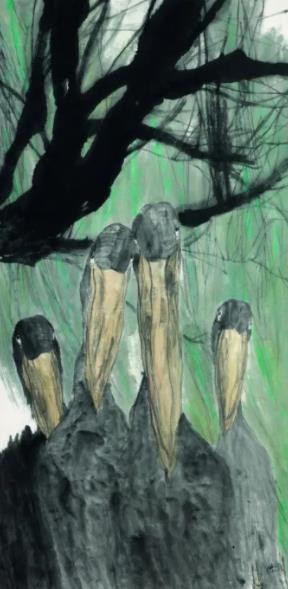
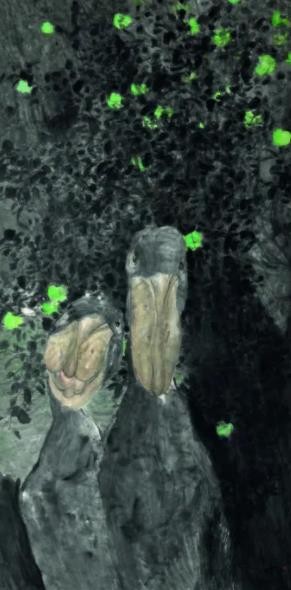
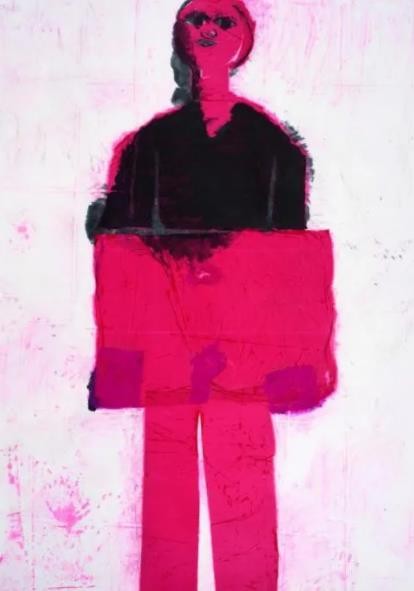
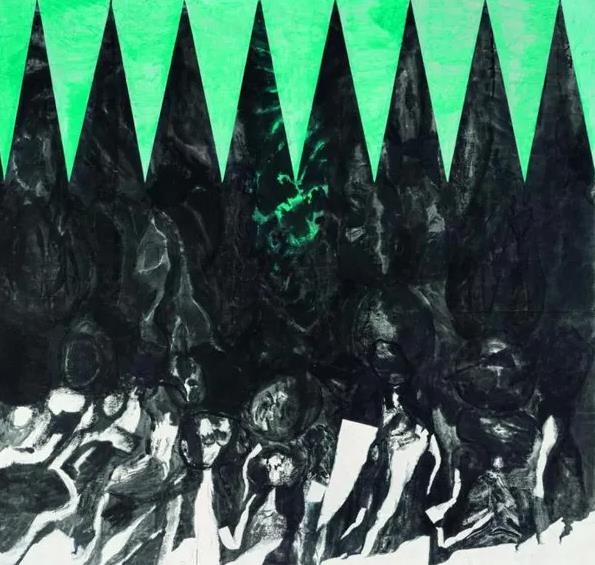
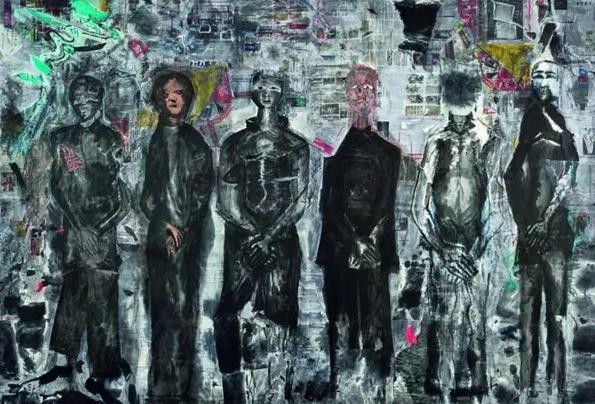
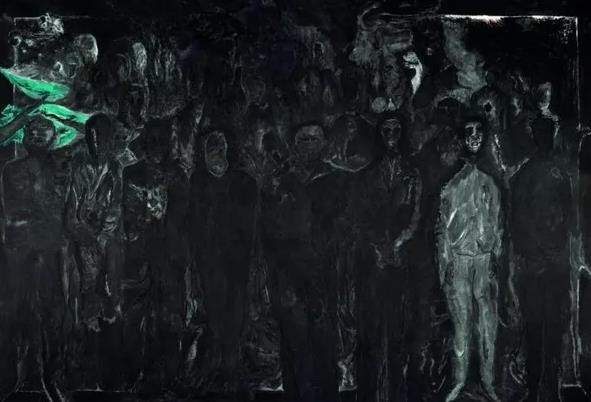
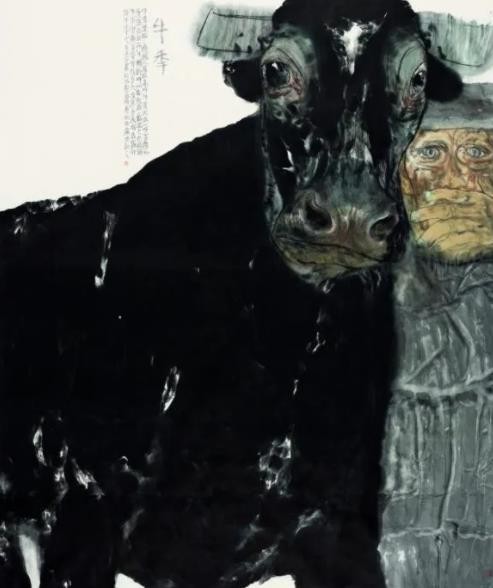
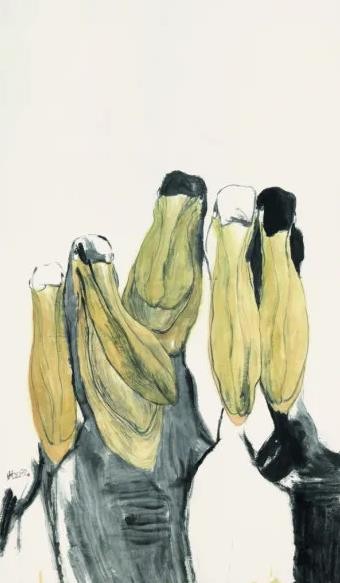
其三,我觉得“辛丑”二字如果不从干支解读而纯从字面理解,则非常吻合几位参展画家的水墨情调。田黎明除外的五位画家,其作品如以世俗审美之眼视之,真是既辛又丑。辛者,五味之一,是五味中具有强烈刺激性的味道,其引发的感受是不适,排斥,所以有辛辣、苦辛、辛酸等词语并用。但深刻的味觉又确实离不开辛味的参与,所有高等级的审美感觉(不管是通过什么感官)一定是“含辛茹苦”的,所有成熟的艺术感知能力,其实都以对辛味的包容和接受程度为标准。几位参展画家如果说有何共同点,那就是他们的绘画中都弥漫着一股辛味:辛苦、辛酸、辛辣,当然还有辛勤。田黎明看上去很淡泊宁静,那表象的背后,骨子里还是透着一股无法言说的辛味;姚大伍的花鸟世界也是如此;张江舟“倩女离魂”的当代都市少女群像,袁武笔下的像发黄的旧照片上的历史枭雄,刘进安魅影幢幢几无面目的芸芸众生,邢庆仁安息劳作并匍伏于黄土地的饮食男女,无不透着浓重的辛味。
Thirdly, from my perspective, Xinchou will be extremely in line with the sentiments of ink paintings created by the six painters if the word is perceived merely in literal meanings after its Ganzhi chronicle meaning is removed. The masterworks of the five painters except for Tian Liming are actually both fierce and loathsome to some degree if being appreciated by secular aesthetics. When it comes to fierceness, it is included as one of the five tastes, but it is considered as the one with the strongest irritant feature and it is able to arouse the feelings of discomfort and exclusion, so there are various words related to it in meanings and forms: such as spicy (fierce hot), fierce bitter (extreme bitter), fierce acid (extreme acid) and so on. Nonetheless, the profound and unforgettable tastes are never separated from fierceness, so the aesthetic feelings of super grade (from whatever senses it is perceived) must be “fierce and bitter” as you taste in your taste buds. Nearly all the mature capacities in artistic perception must regard their tolerance and acceptance of fierce taste as the pure standards practically. The several painters in the exhibition share something in common, if there is, the fierce taste must stand out: fierce bitter, fierce acid, fierce spicy and fierce hardworking. Even if Tian Liming seems to be indifferent and tranquil in paintings and life, he still shows something fierce in his bones which is hard to tell superficially; so does Yao Dawu in his paintings where there are various forms of fierceness in flower & bird world; the fierce taste is pervasive no matter when it comes to the group portraits of contemporary girls in urban areas titled “the Young Lady Died for Love” exhibited by Zhang Jiangzhou, the historical heroes depicted by Yuan Wu on the old yellow photos, the faceless beings with ghosts and goblins going back and forth displayed by Liu Jin'an or the farmers diligently working on yellow fields shown by Xing Qingren.
其四,关于“审丑”。自现代艺术以来,艺术创造基于“审丑”而非“审美”,已是一个不争的事实。所谓“审美”,实质上是依据古典传统艺术形成的感知觉和谐来创造和接受感知觉对象。如果破坏或逸出了这种感知觉和谐,就会被判断为“丑”。事实上,人类因文化的不同,个体的不同,这种所谓的“感知觉和谐”是很不相同的;而且,人类也在不断地突破这种和谐的“低阈”,而挑战感知觉的极限。广义的审美,其实就是狭义的“审丑”不断挑衅和突破狭义的“审美”而走向更高阈值的感知觉和谐的过程。昨天的“审丑”对象,今天不过是“审美”的通常阈值而已;而今天视为“审丑”对象的东西,在明天则不过是一道通俗的“审美”风景。所谓“惊世骇俗”其实就是惊骇了世俗,而世俗,永远只能充当人类审美感知觉和谐的“低阈”,“高阈”则永远是先锋性和前卫性的,当它们出现时,必然是“丑”的,惊世骇俗的。几位参展水墨画家,似乎都经历了一个由美到丑的过程,他们突破了世俗的审美阈值,咬破过去美术教育结的厚茧,像“怪物”一样出现在中国当代水墨画界,引发了持续的“审美骚乱”。世人不能接受的,除了他们某些绘画题材和主题,还有其水墨语言的狂、怪、生、拙、黑、乱。当然,他们受到关注,甚至近年来成为追捧的艺术家,也是因为他们的先锋性和前卫性,他们刷新了人们对水墨画的感知觉和谐的“阈值”。
Fourthly, in terms of “loathsomeness”, it has become the consensus that the artistic creation is completed on the basis of “loathsomeness” rather than “aesthetics” since the modern art was created and transmitted. Regarding the so-called “aesthetics”, the perceptual subjects are created and accepted in accordance with the perceptual harmony reached within the classical traditional art in essence. The relevant works will be judged as “loathsome” if such perceptual harmony is being excluded or destroyed to some extent. As a matter of fact, such category of “perceptual harmony” will vary a lot in different cultural forms and individuals; furthermore, the limit of perceptual harmony has been constantly challenged by people through breaking “low threshold” within the harmony. Practically, the aesthetics in broad sense lies in the process in which the “loathsomeness” in narrow sense pursues the perceptual harmony with higher threshold by constantly challenging and breaking through the “aesthetics” in narrow sense. The subject with “loathsomeness” which was popular yesterday is merely the one with common threshold of “aesthetics” currently; additionally, those being regarded as the subjects of “loathsomeness” currently will be merely the landscapes of “aesthetics” generally accepted tomorrow. The works with so-called features and contents “astonishing the world” are just shocking those common people in the secular world while secular sense is always considered as the “low threshold” for the perceptual harmony of human beings’ aesthetics. Those works with “high threshold” are always considered as avant-garde and frontier, which makes them “loathsome” undoubtedly and astonishing certainly after emerging. When it comes to cases for the several ink painters in the exhibition, they are seemingly undergoing the process from being “aesthetic” to “loathsome”. By breaking through the aesthetic threshold in secular world and cracking the thick cocoon formed in art education of the past, they have emerged in the circle of Chinese ink painting in modern times as some kind of “monster”, which arouses the continuous “aesthetic riot” accordingly. Except for some themes and materials used in works of them, there are also the crazy, weird, strange, clumsy, dark and chaotic features expressed by the ink language which are not accepted by the secular world in this regard. Nonetheless, all the above-mentioned features cannot prevent them from being highlighted and even becoming the great artists in recent years because they are avant-garde and frontier. In such a background, it is these artists that have upgraded the “threshold” of people regarding perceptual harmony in ink paintings.
其五,几位参展艺术家是当今中国水墨画领域难得的坚持在精神和语言两个向度既维系同传统的关联,又勇敢突破传统樊篱的人,他们并没有采取颠覆的姿态和反叛的策略,但他们又尽可能地以学院精英的立场将其前卫性和先锋性做到当下审美阈值的极限,这个极限从精神上是“辛”,从语言上是“丑”,从载体上是“墨”,从美术史上是“事”,是可以言说的“辛丑墨事”。
Fifthly, these six artists in the exhibition are the minorities who have both persisted to maintain the correlation with the tradition and attempted to break through the boundaries of tradition from dual perspectives of spirits and languages in ink painting field of China. Giving up subversive attitudes and discarding rebellious strategies, they have tried every possible means to reach the limit of aesthetic threshold with avant-garde and frontier works by taking the position as scholar elites. Such limit is “fierce” in spirits, “loathsome” in languages, “ink-style” in carriers and “event-arousing” in artistic history. Finally, it is the “Xinchou Ink Matters” expressing abundant provoking significance to people in secular world.
以上五条,是我对于这次展览命名的思考。
Above are what I thought to give the title to this exhibition.
田黎明(b.1951)
Tian Liming (b. 1951)
1991年研究生毕业于中央美术学院中国画系,历任中央美术学院学术委员会委员、硕士生导师、中国画系主任、中国画学院院长,中国国家画院副院长,中国艺术研究院副院长兼研究生院院长。现为中国艺术研究院国画院院长、博士生导师,中国美术家协会中国画艺委会主任、中国画学会会长。
Tian Liming, graduated from the Central Academy of Fine Arts in 1991 majoring in Chinese Painting, successively held the posts in the past of member of Academic Committee, master supervisor, director of the Department of Chinese Painting & dean of the Academy of Chinese Painting in Central Academy of Fine Arts, vice president of China National Academy of Painting, vice president & dean of the School of Graduate Students in Chinese National Academy of Arts. Currently, he is serving as dean of Academy of Chinese Painting & doctoral supervisor in Chinese National Academy of Arts, director of the Chinese Painting Art Committee of the China Artists Association and president of the Chinese Painting Society.
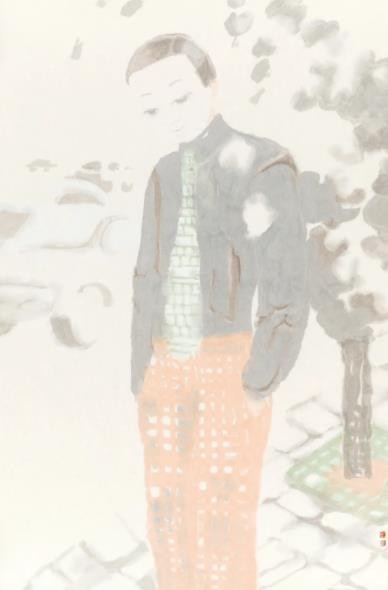
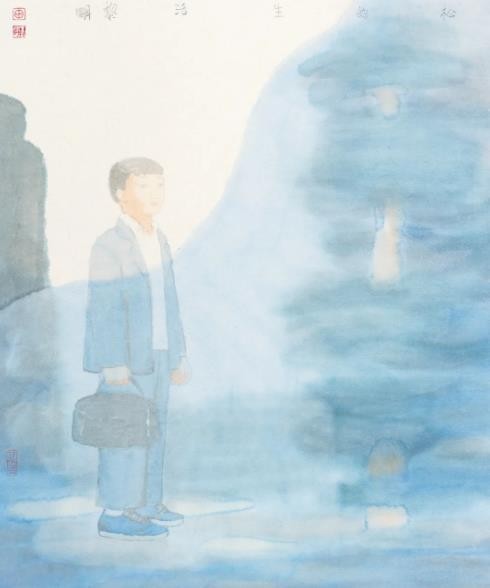
田黎明擅长中国画人物,他的作品追寻中国文化平淡天真的美学理念,以人与自然的和谐为创作法则,在中国水墨画中运用了光的表现方式,并以天人合一的人文感知来体验自然、社会、人的精神境界。
Specialized on creating works related to figures in Chinese painting, Tian Liming is committed to pursuing the aesthetic philosophy existing in the Chinese culture which is simple and innocent. Moreover, he attempts to convey the significance of Chinese ink paintings in the means of light by taking the creative principle in which man and nature are integrated harmoniously. In this way, the spiritual realm expressed by nature, society and man can be experienced by him with the humanistic perception where the heaven and man are infused.
田黎明画中的阳光、空气、水代表了生命存在三要素,这三者在其画中的构成关系是相互照应和相互依存。在笔墨中,田黎明创造出气韵生动、朦胧斑驳的天光云影,寄托了他对山水田园诗意生活的向往和当代人醇厚、清澈若水般的生命境界。让笔墨境界生发在情感与艺术语言的融合,以作品写时代劳动者真善之美,写传统人文气象之美,写平凡生活之美,写时代奋进者之美,写心体感悟时代的纯净之美。
In the paintings created by Tian Liming, the sunshine, air and water are respectively representing the three elements of life. Regarding the relationship among them, they are echoing and interdependent with one another in the painting. In his ink paintings, the vivid, dreamy and dappled lights and shadows above the sky are created for expressing his desire to have a pastoral poetic life with mountains and rivers, as well as the desirable sublimated life of contemporary people as rich as nature, as crystal as water. In this regard, the ink paintings are created in the process of integration between emotion and artistic language. Finally, the essential and pure beauty of laborers in the era is depicted, the traditional humanistic and landscape beauty is expressed, the beauty of common life is presented, the beauty of people striving for better life in era is displayed and the pure beauty from the bottom heart is exhibited.
“田黎明的绘画艺术来自自然源自心灵的光”摘自郎绍君《田黎明绘画艺术》
“The resource of light in Tian Liming’ paintings is not only from nature but also his heart.”
--From “Tian Liming’ s Art” by Lang Shaojun
田黎明的画之所以得到大家的好评 , 是因为他的画有自己的创意 ; 更为重要的是, 他的风格没有变质 , 仍然是中国画 , 而有的人的画虽有新意 , 却未必是中国画。说田黎明的画是中国画 , 主要有以下几个依据 : 首先 , 他的风格基本上是从传统的“没骨”来的 , 但却又把没骨法放大 , 即在没骨法的基础上有所发展 , 这样的发展在以前是很少见的。此外 , 田黎明又加入了光的因素 , 其中有一部分是外来的 , 但是他又把那种外来的光淡化了 , 形成了一种意象化的光 , 这就使这样的手法靠近了传统 , 实际上 , 这是对传统没骨法的一种丰富和发展。
The reason why the paintings of Tian Liming are praised by people is that there is unique creativity in his paintings; what is much more important is that his style remains the essential significance of Chinese painting all in all. Even if there are paintings with considerable creativity, they may not be included as Chinese paintings. The bases of the affirmation that the paintings of Tian Liming are Chinese painting include: firstly, its style originates from the traditional no-outline manner basically, but it has enlarged such manner. That is to say, further development is realized on the basis of no-outline manner, which is rarely seen previously. Additionally, the light element is also added inside with part of it coming from external techniques, but the external light is reduced and faded out to some extent by him in late stage, at last, the imaged light is formed accordingly. In this way, such category of technique is much closer to the tradition. As a matter of fact, it is the enrichment and development based on the traditional no-outline manner.
一般而言 , 没骨法分为两种 , 一种是色彩的没骨 , 一种是水墨的没骨。在我看来 , 田黎明绘画的样式、风格、趣味、格调等全都是围绕着没骨法来进行的。
Generally, there are two types of no-outline manner with one being in color and the other in ink. From my perspective, the pattern, style, interest and tone in paintings created by Tian Liming are all based on no-outline manner.
有的评论说 , 田黎明对光的刻画与印象派有关 , 这似乎并不准确。印象派画家重视光 , 田黎明也重视光 , 这一点是相近的 , 但田黎明对光的理解、对光的处理 , 与印象派对光的处理完全不相干。在印象派画家那里 , 光即是自然的光 , 与色不分离 , 是色的来源 , 不同时间、不同空间的光照其色彩也不同 ; 而在田黎明这里 , 光来自自然 , 也源自心灵 , 光与色没有必然的联系。简言之 , 田黎明画中的光 , 主要是根据画意之需“杜撰”出来的 , 与印象派的描绘自然光色是两回事。
As the comment goes, the depiction of light by Tian Liming is somehow related to impressionism, however, it is inaccurate seemingly. As for the impressionist painters, they highlight the light, so does Tian Liming who has the similar focus, however, his processing and understanding of light is completely different from that presented by impressionist painters. In terms of impressionist painters, light is the natural ray which is combined with color and functioning as the source of color, so the color of light varies a lot in different time and space; in terms of Tian Liming, light may be from nature or the soul and light and color have no inevitable integration in this aspect. Briefly, for light used in the paintings created by Tian Liming, it is mainly “fabricated” in accordance with the requirements of imaging, so it is totally distinctive from the light color depicted by impressionist.
田黎明画作中的光 , 有四个方面值得关注 : 首先 , 通过斑驳阳光的感觉 ( 只是“感觉”而已 ) , 赋予画面以自然生命的活泼 , 这活泼与人物的静谧形成照应。其二 , 它们带给画面一种扑朔迷离的气氛 , 这气氛恰好烘托人物形象的“简朴”, 令人觉得那是跟气象万千的大自然相与共的“简朴”。其三 , 它们大大小小洒满画幅 , 一方面对空间纵深感有所消解 , 另一方面又增加了空间的丰富性 , 甚至造成一种光照无常、欲真又幻的效果。其四 , 它们也和人物造型的“简朴”一样 , 比写实性描绘更具有“间离效果”, 即距离物的真实世界更远一些 , 从而有助于把观者带入画家所醉心的意境即精神世界之中。
Regarding the light in paintings created by Tian Liming, four aspects should be highlighted: firstly, the painting is endowed with some sort of liveliness of natural life by the feeling-dappled sunlight (just the “feeling”), furthermore, such liveliness is echoing with the tranquility of figures. Secondly, they are able to create the atmosphere in the painting which is confusing the eyes of viewers. Such atmosphere will help to make the “simplicity” of figures stand out from overall perspective, then the viewers will generate the feeling of “simplicity” consistent with the spectacular nature. Thirdly, after being scattered all over the paintings in large and small forms, they will dispel the vertical spatial sensation on the one hand, on the other hand, they are also able to enhance the richness of space and even reach the effect of light changes and shadow fantasies. Fourthly, they are in line with the “simplicity” manifested in figure modeling, so it reaches better “spacing effect” than that in realistic depiction. Namely, it goes farther in the real world of the objects, which is conductive to taking the viewers into the artistic conception-the spiritual world in which the painter is completely intoxicated.
刘进安(b.1957)
Liu Jin'an (b. 1957)
首都师范大学美术学院教授,中国国家画院研究员。
Professor of School of Fine Arts in Capital Normal University & Researcher in China National Academy of Painting
刘进安笔记
Notes
by Liu Jin'an
“既古典又当代”或“既传统又现代”这类说法我认为是愚蠢的。一件好的作品,画面能承载的不过三几种元素即可达到绘画的纯度与高度。实际上,绘画的高度即是强的也是弱的,强则强在画家有效的运用了技术和表达这个系统;而弱则是不允许丝毫不确定的杂音进入这个系统。所以,好的作品不是传统、现在和主张的结合体,而是画家情绪表达的充分与达意。可以试想,如按照人们常说的某某作品在继承传统的基础上又吸收了现代主义的因素,吸收了构成,吸取了老师笔意,书法用笔,又受到什么派色彩的影响等等,那画家自己在哪呢?扯不扯!这还叫画吗……
From my point of view, “being classical and contemporary” or “being traditional and modern” is something stupid. For a good painting, its purity and quality can be realized with just three elements, more or less, carried out in the overall imagine. As a matter of fact, the quality of a painting can be both intensified or weakened accordingly. Intensity lies in the effective utilization of system with techniques and expressions; while the weakness lies in the strict prohibition for any impurities to enter the system. So, a good work is never infused by tradition, presence and proposition, but integrated into the full and proper expression of emotion of painters. You may ponder on the following statement that some works have absorbed modernist element, composition, stroke and conception of teachers, calligraphy technique on the basis of inheriting traditional elements, moreover, they are affected by colors of some factions. Then, where is the painter? That’s nonsense! Is it called a painting?
艺术是需要立场的,艺术不是通俗读物,不是描述所闻所见。艺术更不是把我们的文化反转的庸俗不堪。
Different from the popular readings, art requires the position and it is not the simply description of what is heard and observed. Art is not aiming at turning our culture into something ugly.
“如果逻辑源头有问题,所得出的结论一定是有问题的”。这是我一直坚持的一句话。比如:“真”与“真实”在绘画中的运用。(这是个多层次多角度的相对复杂的话题)简而言之,人物形象骨骼、结构塑造的再准确,造型再真实也有可能不能达到艺术感染力的原因则是逻辑原点的问题?
“If the logic is problematic originally, the relevant conclusion must be problematic accordingly”. It is something I have insisted on for a long term when it comes to the application of “truths” and "reality" in paintings. (As the relatively complicated topic from multiple levels and multiple perspectives) briefly, the reason why a painting can not reach the artistic effect lies in the problem of the logical origin no matter how accurate the skeleton and structure of figures are depicted and how real they are created.
化主张是由这些成分构成的文化感受。我的问题是,批评家、画家在强调技法承载的文化时,却乎略了视觉图式会改变技法价值的作用,也就是说,图式的文化取向不等同于技术的文化内涵。“文以载道”和画家以“道”论画,虽然其意相同,但取法则相去甚远。这其中的关键点是:绘画是以形象说话的。“形象”才是语言,才是意义,才是价值。研究形象和构成形象的关系才能创造出当代价值,才能摆正传统与现代的节奏,才能端正态度反之亦然。只修笔墨不研究笔墨构成要件笔墨必然被扭曲;笔墨的价值在于运用,不在笔墨本身。作品是单纯的,文化是复杂的。中国画不应成为被文化绑架下的艺术,用“儒、道、释”、“天人合一”、格物致知”、或者“心学”、“理学”之类的学说规划中国画,指认中国画,批评中国画,让中国画成为时刻被训化的一个产品。正确的状态是,艺术创造转化为了文化,而不是由文化规划了绘画。以此推论,传统生成于艺术家的创造,而非继承所得。这也就说明了中国画继承和创新的关系问题。
What is proposed in the paintings is actually the cultural feeling created by the artistic components. My doubt goes that the critics and painters are easy to ignore the role of visual images in changing the value of techniques while emphasizing the carrier function of techniques. Namely, the cultural orientation expressed in visual images is not equal to the cultural connotation existing in techniques. In terms of “culture carrying forward Tao” and painters commenting paintings based on "Tao", there is the same significance, but the acquiring methods adopted are quite different. The key lies in: painting speaks with its visual images. “Images” are representatives of languages, significance and values. Only after carrying out researching on the relationship between images and constituent images can the contemporary values be created, the rhythm of tradition and modernity be corrected, the attitude be upright and vice versa. The ink paintings will certainly be distorted if one just practices its techniques while ignoring the constituent elements; the values of ink paintings lie in application, not the paintings themselves. Except that, works are simple, but culture is rather complicated. Chinese paintings are not supposed to become the artistic forms kidnapped by culture. It is incorrect to plan, designate, criticize Chinese paintings and make them become products being disciplined from time to time with the so-called theories ranging from “Confucianism, Taoism and Buddhism”, “integration of man and nature” “psychology” to “Neo Confucianism” and so on. The right state of Chinese paintings should be based on the matter of fact that the artistic creation is transformed into culture while culture cannot plan the forms of painting. It is hereby concluded that tradition is generated from the artist's creation while not inheritance. Namely, the relationship between inheritance and innovation in Chinese painting is obvious.
袁武(b.1959)
Yuan Wu (b.1959)
1959 年 9 月生于吉林省吉林市,1984 年毕业于东北师范大学艺术系并获学士学位,1995 年毕业于中央美术学院国画系并获硕士学位。
Born in September, 1959 in Jilin City of Jilin Province, Yuan Wu graduated with bachelor’s degree from Department of Art of Northeast Normal University in 1984 & with Master’s Degree from Department of Chinese Painting of Central Academy of Fine Arts in 1995.
历任北京画院常务副院长、执行院长,现为中国美术家协会理事、中国画艺术委员会副主任;北京画院专业画家,国家重大题材美术创作艺术委员会会员。曾担任全国美展第十二届、第十三届中国画展区评委。
He has successively held the executive vice president of Beijing Fine Art Academy. Currently, he is serving as vice director of Chinese Painting Art Committee and council member of China Artists Association, artist of Beijing Fine Art Academy & member of National Art Creation Committee for Major Themes. He also served as the judge on Chinese Painting of the 12th and 13th China National Art Exhibition.
关于袁武——范迪安
About Yuan Wu -- by Fan Di’an
袁武以其粗粝厚重的人物画和真挚的现实关切情怀享誉画坛,在他那一幅幅巨大的水墨人物作品中,无论是对历史题材的表现还是对农民与其栖息的大自然的生命关切,甚至对当代特定人群精神生活现象的深刻再现,都传达了他以当代“现实主义”题材为导向,以画家对所在社会中普通人的生活方式为关注点和精神归属的价值立场。袁武以最为质朴的人文视角,以特殊的绘画信念为动力,在长期坚持和不断深化的水墨累积中,练就了用最单纯而雄强的绘画语言捕捉人物瞬间情态、社会身份和精神特质的高超能力,这就使得他的“创作”可以用最纯粹的方式获得最准确的效果,这也构成了他艺术强烈的时代精神。
Yuan Wu is renown for his heavy and profound figure paintings, as well as his sincere sentiment and concern on the reality in the painting circle. In his huge works of figure ink paintings, the living styles of common people in the society and the value position in their spiritual belongings are highlighted by the painter with the direction of “realistic” themes no matter when it comes to the expression of historical events, the concern on farmers and the natural life forms or the profound reflection of spiritual world for special groups in the modern times. From the most simple humanistic perspective, Yuan Wu has obtained the super-ability to capture the character's instantaneous modality, social identity and spiritual traits with his pure but strong painting works by taking the special painting belief as the power in the accumulative ink painting creation for which he has persisted for long term and kept deepening accordingly. In this way, he is able to reach the most accurate effect in the purest way in his “creation”, which is also part of his strong artistic spirit of the times.
在袁武的水墨世界中,他所关切的人是具体而鲜活的个体,而不是在传统现实主义观念中那种“概念性”的、为突出主题而设定好的“典型”。当代画坛充斥人们视线的往往是那种缺失了特定活力和真实感情的描绘对象,这近乎使人们以为现实主义的绘画已经失去活力,袁武的创作在某种程度上就是对这种怀疑的自觉反击,他要用一种充满“人文关切”的视角将那些关于“人的问题”重新领回绘画,重振人物画在当代的艺术雄风,这除了真切的人文关怀外,还必须创建和延伸出一种适用并完成这一目标的新型水墨语汇。
In the ink painting world of Yuan Wu, what he highlights is the concrete and vivid individuals while not the “conceptual” “typical” case which is set up in advance within the traditional realistic concept. Currently, what has caught up the attention of people is usually the painting subject without the specific vitality and real feelings in the circle. Afterwards, it is easy for people to think that the realistic painting has lost its vitality. In such a background, the works created by Yuan Wu function as the counterattacks to this doubt of people. The “issues related to human beings” are brought to paintings once again and the key position of figure paintings is re-enhanced by him from the perspective of “humanistic concerns”. Except for the genuine humanistic concerns, it is necessary to create and expand a new type of ink vocabulary suitable for reaching such goal.
构成袁武水墨人物绘画特色的语汇,源自初学画时的两个偶然:其一,是因难得宣纸而以普通图画纸为替代,先将纸打湿待干湿适宜的时刻再以笔落墨以达“吸水融墨”效果的“仿生宣”意外实践,由此而练就的本领成为他后来巨幅画面中那一团团浓重而极富感染力的“墨块”的来源秘诀;其二,由临摹古代山水画皴法样式入手而获得的“运笔习惯”,成为完成人物面容、衣饰以及其它物象的表现手法。袁武这种在造型探索中的理性锤炼最终达到了今天我们看到的“笔精墨妙”的水准,传达了一种在“写实性水墨语汇”中有机融入传统中国画“笔墨文脉”的视觉魅力。在他“个人化”的水墨语汇中,他将对普通人的关切视角伸展到具体的农民与其生存环境的情景表现中,在他的笔下,人物具有巨大的体量,充满“墨”的“质感”,与“意绘”出的牛群在一起,表达出人与自然之间的“通灵体验”。将现实主义水墨语言带入“当代”的生动案例还表现在他最新的一组由 65 张单体人物肖像构成的《大昭寺的早晨》,他用速写式的“线”直取人物结构,再辅以皴擦以极简约的色生动地捕捉到了一位位不同性别、年龄的朝圣者,表达了自己对虔诚信念的精神共鸣和心理震撼。他对人物个体之“像”和人的群体之“相”的准确刻画传达了对当代人物关切情怀的“精神方向”,在现实主义的水墨人物创作上绽放出新的生机。
The language contributing to the features of the ink figure paintings of Yuan Wu comes from two incidental events he encountered when he learned painting in the initial stage. The first one is: he used ordinary painting paper to replace Xuan paper which was hard to obtain at that time. The paper was made wet on purpose and put aside for drying, then ink was used onto the paper when it reached the proper moisture, by this time, the effect of “absorbing water and infusing ink” was reached and the accidental practice was the harvest in “imitation of Xuan paper”. With such skills obtained in the process, he picked up the secret and used in his huge painting works in which there were thick and infectious “ink blocks”; the second one is: the “brush movement habit" that he had obtained when copying the texturing style of ancient landscape painting became the expressive manner for him by which the faces, clothes and other objects of figures were depicted vividly. After undergoing polishing and training in a rational way for modeling exploration, Yuan Wu finally presents to us his level of skills - “accurate brush movement and smart ink adding” as what we are seeing today. Moreover, the visual charm is delivered and presented as: the “realistic ink language” is infused into the “brush and ink context" of traditional Chinese painting organically. When it comes to his “personalized” ink language, the concerning perspective of common people is further extended to the specific scene performance for farmers and their living atmosphere. There is huge volume for the figures expressed in his works. The “texture” filled with “ink” is able to express the “psychic experience” between man and nature together with the cattle group painted by “free stroke”. As for the vivid case in which the the realistic ink language is brought into “modern” paintings, the work titled “Morning at Jokhang Temple” - the new series of figure paintings consisted by 65 individual portraits must stand out. The “lines” of sketch type are used to directly draw the structures of figures, then the pilgrims of different genders and ages are captured with the supplementation of chapped wipe and simple colors. The spiritual resonance and mental shock of him for the pious faith held inside pilgrims are expressed. He tries to convey the “spiritual direction” for concerns on modern figures by accurately depicting the “portraits” of individuals and the “state” of the group of individuals. Eventually, there is new vitality blooming from the creation of realistic ink figures.
参展艺术家
田黎明(中国画学会会长、中国艺术研究院博士生导师)
刘进安(首都师范大学美术学院教授,中国国家画院研究员)
袁武(中国美术家协会理事、中国画艺术委员会副主任)
邢庆仁(中国美术家协会理事,中国国家画院研究员)
张江舟(中国国家画院院委、研究员,博士、硕士生导师、俄罗斯艺术科学院荣誉院士)
姚大伍(国家一级美术师、中国画学会(美国)名誉主席)